
What Is a Cease and Desist Letter for Copyright Violation?
A cease and desist letter for copyright violation is a professional written notice from a copyright owner (or their representative) demanding that the recipient immediately stop infringing on protected material. It serves as the most common first step before escalating to a federal copyright lawsuit.
The letter puts the recipient on official notice of the infringement, creates a documented paper trail, and often resolves the matter without going to court. Under U.S. copyright law (Title 17 of the U.S. Code), unauthorized reproduction, distribution, display, or creation of derivative works can constitute infringement.
Important note: This is different from a DMCA takedown notice. Many rights holders use both tools together for maximum effect.
Cease and Desist Letter vs. DMCA Takedown Notice
Aspect | Cease and Desist Letter | DMCA Takedown Notice |
Purpose | Direct demand to the alleged infringer to stop | Request to online platforms to remove content |
Recipient | The person or business committing the violation | Internet service provider, hosting company, YouTube, Google, etc. |
Legal Basis | General U.S. copyright law (17 U.S.C. § 501) | Digital Millennium Copyright Act (DMCA), Section 512 |
Forces Removal? | Voluntary compliance only | Yes — platforms must act expeditiously to qualify for safe harbor |
Best Used For | Serious cases, offline use, direct theft, or when you want a formal record | Quick online content removal from websites and social media |
Cost | Low (template + mailing) or attorney-drafted | Usually free if you follow the exact format |
Recommendation: For online infringement, send a cease and desist letter to the violator and a DMCA notice to the platform hosting the content.
When Should You Send a Cease and Desist Letter for Copyright Violation?
Send one when you discover:
- Your original photos, articles, videos, music, software code, designs, or other creative works are being used without permission.
- Someone is copying large portions of your website content or blog posts.
- A competitor or third party is selling or displaying your copyrighted material.
- Infringement that may qualify for statutory damages.
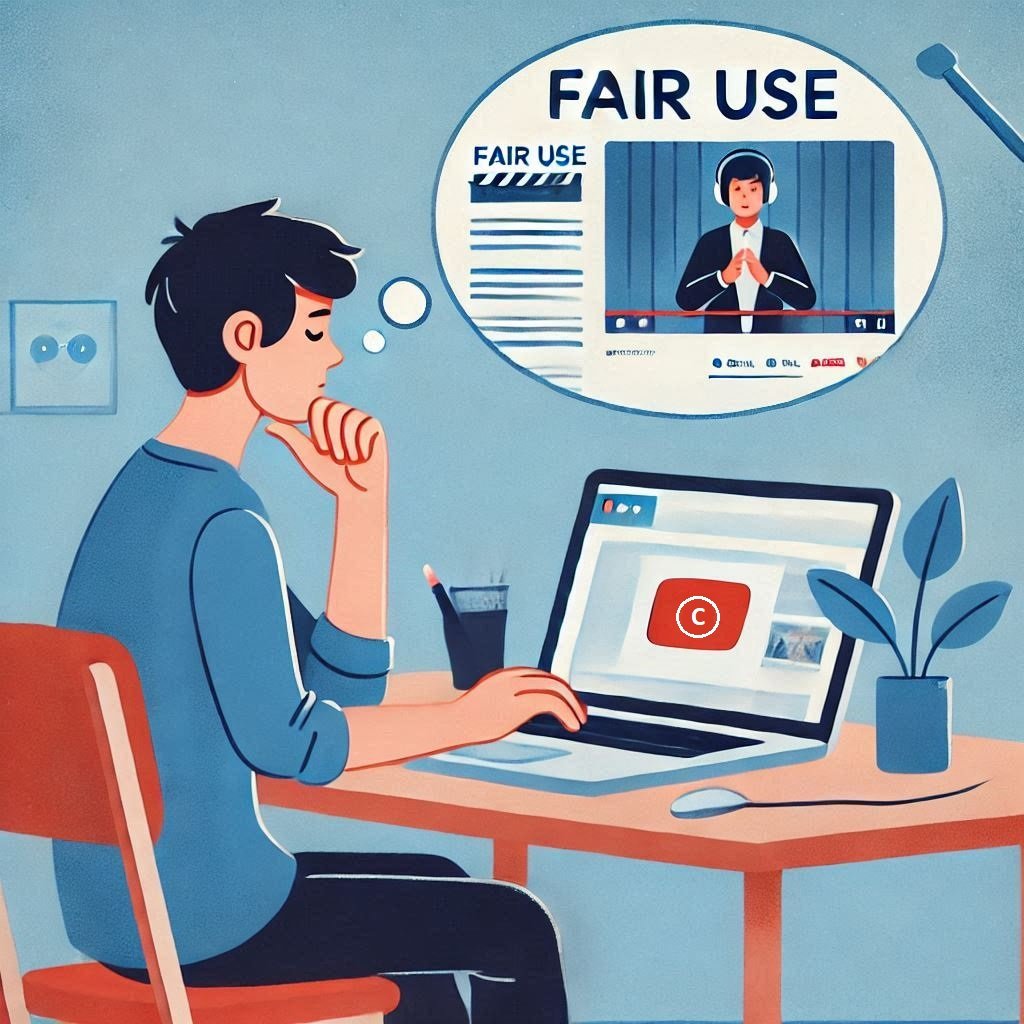
Do not send a letter if the use may be protected as fair use (e.g., criticism, commentary, news reporting, teaching, or research). In such cases, consult a qualified U.S. intellectual property attorney first to avoid potential counterclaims.
Step-by-Step: How to Write a Cease and Desist Letter for Copyright Infringement (2026 Guide)
Keep the tone professional, factual, and non-threatening. Follow this structure:
- Sender’s contact information and date (top of the page).
- Recipient’s full name and mailing address.
- Clear subject line: “Cease and Desist – Copyright Infringement of [Title of Your Work]”.
- Introduction: Identify yourself as the copyright owner.
- Description of the copyrighted work (title, creation/publication date, registration number if available).
- Detailed description of the infringement (include exact URLs, screenshots, or examples).
- Statement of the violation: Reference 17 U.S.C. § 501 and potential statutory damages up to $150,000 per work for willful infringement.
- Specific demands (use numbered list):
- Immediately cease all use, reproduction, and distribution.
- Remove or delete all copies within a set deadline.
- Confirm compliance in writing.
- Reasonable deadline (typically 10–14 days).
- Reservation of rights: State that you reserve the right to pursue all legal remedies, including litigation.
- Professional closing and signature.
Send the letter via certified mail with return receipt requested and also by email. Keep copies of everything.
Free 2026 Sample Cease and Desist Letter Template (Copyright Infringement)
Important Disclaimer: This is a general sample template only and is not legal advice. Customize it carefully and strongly consider having an attorney review or draft the final version for your specific situation.
Sample Text:
[Your Full Name or Company Name]
[Your Mailing Address]
[City, State, ZIP Code]
[Email Address]
[Phone Number]
[Date]
[Recipient’s Full Name or Company Name]
[Recipient’s Mailing Address]
[City, State, ZIP Code]
Subject: Cease and Desist – Copyright Infringement of “[Title of Your Work]”
Dear [Recipient’s Full Name or “Sir/Madam”],
I am writing on behalf of [Your Name / Company Name], the owner of the copyright in the original work titled “[Exact Title of Your Work]” (the “Work”). The Work was created and first published on [Date] and is protected under United States copyright law.
It has come to our attention that you are engaging in unauthorized use of the Work by [describe the infringement specifically, e.g., “reproducing the full text of the Work on your website located at https://example.com/page” or “using our copyrighted photograph in your commercial advertising”].
This unauthorized use constitutes copyright infringement under 17 U.S.C. § 501. If the infringement is found to be willful, you may be liable for statutory damages of up to $150,000 per infringed work, plus attorney fees and costs.
We therefore demand that you immediately:
- Cease all further reproduction, distribution, display, or any other use of the Work.
- Remove or delete all copies of the infringing material from [list specific URLs, platforms, or locations] within 10 days of the date of this letter.
- Provide written confirmation to us that you have fully complied with these demands.
This letter does not constitute a waiver of any rights or remedies available to us under law. We reserve the right to pursue all legal remedies, including filing a lawsuit in federal court seeking injunctive relief, damages, and attorney fees.
Please govern yourself accordingly.
Sincerely,
[Your Full Name]
[Your Title, if applicable]
[Company Name]
[Email and Phone]
What to Do If You Receive a Cease and Desist Letter for Copyright Violation
- Do not ignore it — it creates a formal record that can be used in court.
- Stay calm and avoid emotional or defensive replies.
- Consult a licensed U.S. IP attorney promptly (ideally within 48–72 hours).
- Assess the claim: Is the work actually copyrighted? Is there a valid fair use defense? Was registration timely?
- Respond professionally, usually through counsel. Options include full compliance, negotiation, or a denial letter if the claim lacks merit.
- Preserve all evidence (screenshots, timestamps, communications).
Potential Consequences of Ignoring a Cease and Desist Letter
- Federal copyright lawsuit.
- Statutory damages ranging from $750 to $30,000 per work (up to $150,000 if willful).
- Award of the copyright owner’s attorney fees and court costs.
- Permanent injunction forcing removal of the material.
Common Mistakes to Avoid
- Sending a letter without sufficient proof of ownership.
Without clear evidence that you actually own the copyright (such as registration documents, creation records, or timestamps), your letter may lack credibility and can be easily challenged or ignored by the recipient.
- Using overly aggressive or threatening language.
A hostile or bullying tone often makes the recipient defensive, lowers the chance of voluntary compliance, and can make you look unreasonable if the matter reaches court.
- Failing to register the work with the U.S. Copyright Office (copyright.gov) before or shortly after publication if you want full remedies.
Although copyright exists automatically upon creation, you must register the work with the U.S. Copyright Office to file a federal lawsuit and claim statutory damages up to $150,000 per work plus attorney fees. Timely registration (ideally before infringement or within 3 months of first publication) is essential for stronger legal protection.
- Relying solely on an unedited AI-generated template without customization.
Generic templates often miss important details specific to your situation, contain inaccuracies, or use improper tone, which can weaken your position or even expose you to counterclaims.
- Ignoring possible fair use considerations.
If the other party’s use may qualify as fair use under 17 U.S.C. § 107 (for purposes such as criticism, commentary, news reporting, teaching, scholarship, or research), sending a cease and desist letter could be unnecessary and might even expose you to a bad-faith claim or countersuit.
Bonus Tip: When sending any cease and desist letter, always reference the exact legal provision, such as 17 U.S.C. § 501 for copyright infringement and 17 U.S.C. § 504 for statutory damages.
Frequently Asked Questions (FAQs)
Yes, individuals can send one, but attorney review or drafting is highly recommended for tone, accuracy, and legal strength.
A 10–14 day deadline is standard and considered reasonable.
No, compliance is voluntary. For faster online removal, combine it with a properly formatted DMCA takedown notice to the hosting platform.
Fair use is a limited defense under 17 U.S.C. § 107 that allows limited use of copyrighted material for purposes such as criticism, comment, news reporting, teaching, scholarship, or research. Whether a use qualifies depends on four factors evaluated by courts.
No, registration is not required to send the letter. However, timely registration (before infringement or within 3 months of first publication) is required to be eligible for statutory damages and attorney fees in a lawsuit.
Yes. They remain a low-cost, common first step in copyright enforcement and are viewed favorably by courts as evidence of good-faith efforts to resolve disputes.
Conclusion
A properly written cease and desist letter for copyright violation continues to be one of the most effective and affordable initial tools for protecting your intellectual property rights in the United States. Whether you are enforcing your own copyrights or responding to a letter you received, understanding your rights and obligations under current U.S. copyright law is essential.
Recommended Action Steps:
- Register important works promptly at copyright.gov.
- Document all instances of potential infringement with timestamps and screenshots.
- Bookmark this guide and consult a qualified IP attorney for complex situations.
Need personalized help? Consult a licensed U.S. intellectual property attorney familiar with copyright matters.
Legal Disclaimer
This article is for general information only. It does not give any legal advice. Laws and rules can change, and every situation is different. If you need help with a specific problem, you should talk to a qualified IP expert.

Dr. Shahnaz Kaushar, PhD in Intellectual Property Rights
I’m a content writer and intellectual property rights specialist with over a decade of experience. I hold LL.B, LL.M, and a PhD in IPR, have taught IP law at the academic level, and have worked with a leading law firm in Dubai on brand protection and trademark matters. I use my legal background to create clear, easy‑to‑understand content that helps business owners protect their ideas.