
If you run a blog, business website, online store, YouTube channel, or social media account, you have probably asked this question at least once:
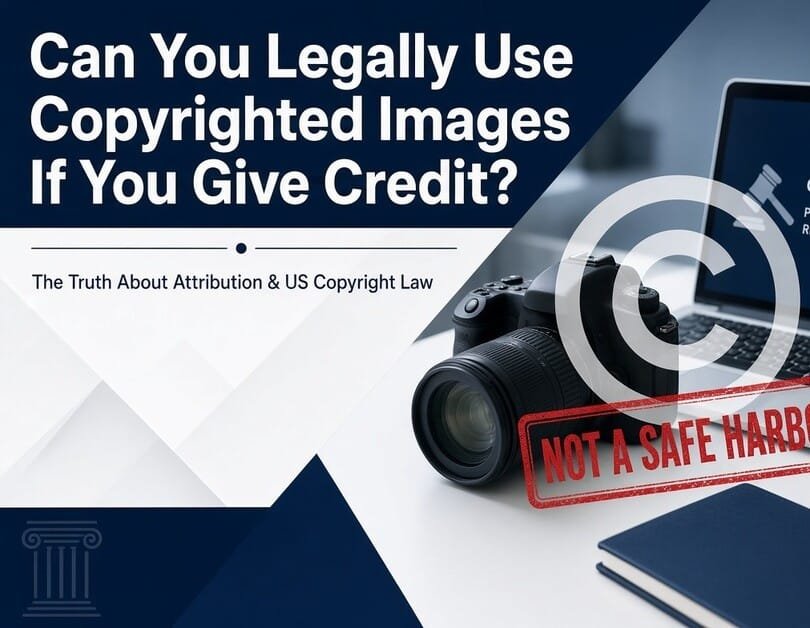
Many people ask: can you use copyrighted images if you give credit?
The short answer is:
No. In most cases, giving credit does not give you the legal right to use a copyrighted image.
Giving credit (also called attribution) does not make it legal to use a copyrighted image in the United States.
Many people believe that adding a line like “Photo by John Smith” or “Image credit: [photographer]” protects them from copyright claims. This is one of the most common and costly misconceptions about U.S. copyright law. Credit is polite and often required under certain licenses, but it is not a substitute for permission.
Here’s a clear, practical explanation of how the law actually works.
Why Giving Credit Does Not Make the Use Legal
Under U.S. copyright law (Title 17 of the United States Code), the creator of an original photograph or image automatically owns exclusive rights the moment the image is created and fixed. These rights include the right to:
- Reproduce the image
- Distribute copies
- Display the image publicly
- Create derivative works
Using the image without authorization generally violates one or more of these exclusive rights.
The U.S. Copyright Office has long stated that acknowledging the source of copyrighted material does not substitute for obtaining permission. Courts treat copyright infringement and plagiarism as separate issues. Plagiarism is an ethical problem (passing someone else’s work off as your own).
Copyright infringement is a legal problem (using the work without the owner’s permission). You can credit the photographer perfectly and still infringe their copyright.
When Is It Legal to Use an Image?
There are only a few situations in which you can safely use an image:
Situation | Is Credit Required? | Safe to Use? | Notes |
Public domain | No | Yes | Works whose copyright has expired or been dedicated to the public domain |
Creative Commons license | Usually yes | Yes (if you follow the terms) | Must follow the specific license conditions |
You have written permission or a license | Sometimes | Yes | Best and safest option |
Fair use | Not required by law | Sometimes | Narrow, case-by-case, and risky for full images |
You took the photo yourself | N/A | Yes | You own the copyright |
- Public Domain Images
Images in the public domain can be used freely for any purpose (including commercial use) without permission or credit. In the U.S., most works published before 1930 are now in the public domain (as of 2026).
Government works created by federal employees as part of their official duties are also generally in the public domain.
- Creative Commons Licensed Images
Many photographers release images under Creative Commons (CC) licenses. These licenses grant advance permission under specific conditions. Every standard CC license requires attribution. Common types include:
- CC BY — Free to use for any purpose (including commercial) as long as you give credit
- CC BY-SA — Same as above, but any adaptations must use the same license
- CC BY-NC — Non-commercial use only + credit required
- CC BY-NC-ND — Non-commercial, no modifications, credit required
Always check the exact license. Using a CC-NC image in a commercial context (or failing to give proper credit) removes the protection of the license and can put you back in infringement territory.
Proper attribution for Creative Commons images typically includes:
Title + Author + Source + License (often called the TASL method).
- Permission or a License
The cleanest and safest approach is to get permission from the copyright owner or buy a license from a stock photo library (Adobe Stock, Shutterstock, Getty, etc.). Many independent photographers will grant permission if you ask, especially if you offer credit or a small fee.
- Fair Use (Use With Caution)
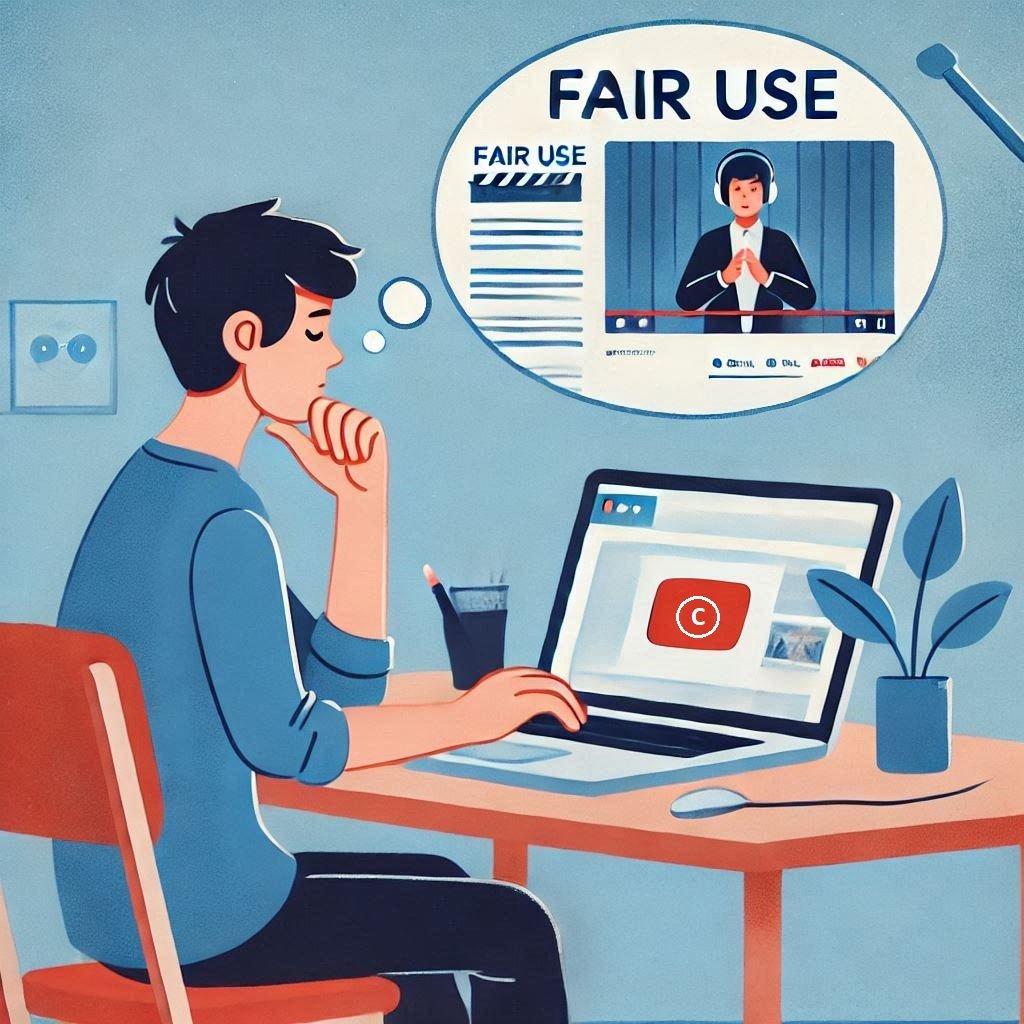
Fair use is a legal defense under Section 107 of the Copyright Act. Courts consider four factors:
- Purpose and character of the use (commercial vs. nonprofit, transformative vs. substitutive)
- Nature of the copyrighted work
- Amount and substantiality of the portion used
- Effect on the potential market for the original work
Using an entire copyrighted photograph as decoration or illustration on a blog, website, or social media post is rarely fair use. Courts have repeatedly rejected the argument that adding a credit line or a short caption makes the use fair.
Fair use is more likely to apply in cases of criticism, commentary, news reporting, or genuine transformative use — but it is decided case by case and is never guaranteed.
Can You Use Copyrighted Images If You Give Credit? – Common Myths
- “I found it on Google Images, so it’s free.” — False. Google Images is a search engine, not a free image library.
- “There’s no © symbol, so it’s not copyrighted.” — False. Copyright exists automatically. Notice is not required.
- “I’m not making money from it, so it’s fine.” — False. Non-commercial use can still infringe.
- “I only used a small part of the image.” — Still risky with photographs, which are often used in full.
- “I gave credit, so the photographer can’t sue me.” — False. Credit does not equal permission.
Risks of Using Copyrighted Images Without Permission
If you use a copyrighted image without permission, the copyright owner can:
- Send a takedown notice (under the DMCA)
- Demand payment (licensing fees or settlement)
- Sue for actual damages or statutory damages (which can range from $750 to $30,000 per work, and up to $150,000 for willful infringement)
Many image owners and stock agencies actively monitor the web for unauthorized use.
Practical Advice for Bloggers, Businesses, and Content Creators
- Prefer images you create yourself, public domain images, or properly licensed stock/Creative Commons images.
- When using Creative Commons images, follow the attribution requirements carefully.
- When in doubt, ask for permission or choose a different image.
- Keep records of licenses and permissions.
- Do not rely on “credit” as your legal protection.
Final Takeaway
So, can you use copyrighted images if you give credit?
No. Giving credit is the right thing to do ethically, and open licenses often require it. But under U.S. copyright law, credit alone does not authorize you to use a copyrighted image.
Permission (or a valid license or public domain status) is what makes the use legal. When the law is unclear, the safest approach is always to get permission or use an image you clearly have the right to use.