
Every year, thousands of people and businesses in the United States get into legal trouble for copyright violation — often without knowing they did anything wrong.
Using a random photo from the internet, sharing music without a license, or reposting written content without permission can all lead to serious penalties. These penalties in the US can be very harsh and can cause major financial damage.
This guide explains everything you need to know about copyright violation penalties under US law. It covers civil fines, statutory damages, criminal charges, and even jail time.
It also explains what willful infringement means, how the DMCA changes the penalties, and — most importantly — how to avoid getting sued in the first place.
Quick Answer: Civil copyright infringement penalties range from $750 to $150,000 per work infringed. Criminal penalties for willful infringement can include fines up to $250,000 and imprisonment for up to 5 year.
What Is Copyright Infringement Under US Law?
Copyright infringement is the unauthorized use of a copyrighted work in a way that violates the exclusive rights granted to the copyright owner under the US Copyright Act (Title 17 of the United States Code). These exclusive rights include:
- Reproducing the work (copying)
- Distributing copies by sale, rental, or lending
- Creating derivative works (adaptations, translations, remixes)
- Publicly performing or displaying the work
- Transmitting the work digitally (including streaming)
A copyright violation occurs the moment someone exercises any of these rights without permission from the rights holder — regardless of whether they profit from it or even knew the work was copyrighted.
Important: Copyright protection is automatic in the United States. A work is protected the moment it is created and fixed in a tangible form — registration with the US Copyright Office is not required for protection to exist, though it is required before filing a lawsuit.
Civil vs. Criminal Copyright Violation Penalties
Copyright infringement in the US can lead to civil penalties, criminal penalties, or sometimes both. It is important to understand the difference.
Civil Copyright Infringement Penalties
Civil cases are started by the copyright owner (the plaintiff) against the person accused of infringement (the defendant) in federal court. The goal is financial compensation. Under 17 U.S.C. § 504, a court can award:
- Actual damages — the real financial harm suffered by the copyright owner, plus any profits the infringer made from the violation.
- Statutory damages — a fixed range set by law, awarded per work infringed, even without proof of actual financial loss
Statutory damages are very powerful because the rights holder can choose them instead of proving actual harm. The ranges are:
Type of Infringement | Minimum Penalty | Maximum Penalty |
Innocent infringement | $200 per work | $750 per work (or more, at court discretion) |
Standard civil infringement | $750 per work | $30,000 per work |
Willful infringement (civil) | $750 per work | $150,000 per work |
Criminal (non-commercial) | Fines | 1 year imprisonment |
Criminal (willful, commercial) | $250,000 fine | 5 years imprisonment |
Additionally, the court may award attorneys’ fees and court costs to the prevailing party, and issue injunctions to stop ongoing infringement or impound infringing materials.
Criminal Copyright Infringement Penalties
Criminal charges are pursued by federal prosecutors (not copyright owners) and apply when infringement is willful and done for commercial advantage or private financial gain, or meets specific reproduction/distribution thresholds. Under 17 U.S.C. § 506 and 18 U.S.C. § 2319:
- Felony (first offense): Reproduction or distribution, during any 180-day period, of at least 10 copies or phonorecords of 1 or more copyrighted works with total retail value of more than $2,500 — up to 5 years in federal prison
- Misdemeanor (lesser cases): Up to 1 year imprisonment and lower fines
- Fines: Up to $250,000 per offense under the No Electronic Theft (NET) Act
- Repeat offenses carry doubled prison terms (up to 10 years)
Criminal copyright cases are relatively rare but have risen sharply in the digital era, particularly for large-scale piracy operations, illegal streaming services, and peer-to-peer file sharing networks.
Key Distinction: Civil penalties are paid to the copyright owner. Criminal fines and prison sentences are imposed by the federal government. Both can apply to the same infringement. |
Willful vs. Innocent Copyright Infringement — Why It Matters
One of the biggest things that affects copyright violation penalties is whether the infringement was willful or innocent. The difference can be huge — sometimes tens of thousands of dollars.
Willful Infringement
Willful infringement means the person knew they were violating copyright law, or they acted in a way that showed they did not care if it was legal or not. Courts can still call it willful even if someone says they “didn’t know,” if the situation clearly showed the infringement was obvious.
For willful infringement, statutory damages can go up to $150,000 per work. Courts have given very large awards. In one case, a jury awarded $1 billion in statutory damages (Sony Music Entertainment v. Cox Communications), though this amount was later changed on appeal.
Innocent Infringement
Innocent infringement happens when the person truly did not know — and had no reason to know — that what they did was a copyright violation. This defense is limited and needs proof of honest, good‑faith belief.
For innocent infringement, a court can lower statutory damages to as little as $200 per work. But this defense becomes weaker or disappears if:
- The work had a clear copyright notice (© symbol, year, author name)
- The work was registered with the US Copyright Office
- The infringer was told about the violation and kept doing it anyway
DMCA Violation Penalties
The Digital Millennium Copyright Act (DMCA) of 1998 added important rules for the online world. DMCA violations have their own penalties, separate from normal copyright infringement.
Anti-Circumvention Violations (Section 1201)
It is illegal to get around technological protection measures (TPMs) like encryption, DRM, or access controls that protect copyrighted works. Penalties include:
- Civil: Statutory damages from $200 to $2,500 for each act of circumvention
- Criminal (first offense): Up to $500,000 in fines and 5 years in prison
- Criminal (repeat offense): Up to $1,000,000 in fines and 10 years in prison
DMCA Takedown Violations
Under the DMCA’s safe harbor rules (Section 512), online platforms are protected if they quickly remove content after a takedown notice. But sending a false or abusive DMCA takedown notice — meaning you wrongly claim something is infringing — can make the sender responsible for damages under Section 512(f), including attorneys’ fees.
ISP Liability After Cox v. Sony (2026)
In March 2026, the US Supreme Court ruled in Cox Communications v. Sony Music that an ISP is not contributorily liable just because it knows some users are infringing or keeps giving them service.
To be liable, the ISP must intend for its service to be used for infringement — meaning it must actively encourage it or design the service to support infringement. This ruling limits secondary liability for ISPs in the future.
Copyright Infringement Penalties by Type of Work
The type of copyrighted work can change what penalties look like. It can also change how often rights holders take action.
1. Music Copyright Infringement
Music is one of the most strongly protected areas in the US. A song has two copyrights: one for the songwriter (composition copyright) and one for the record label (sound recording copyright).
Using a song without permission can break both copyrights at the same time. Statutory damages are counted per work, meaning per song, not per download.
Most cases involve streaming platforms, social media videos with unlicensed music, or peer‑to‑peer file sharing. The Recording Industry Association of America (RIAA) often takes action against both people and platforms.
2. Image & Photography Copyright Infringement
Using a photo from Google without a license is one of the most common copyright mistakes. Stock photo companies and photographers use tools to find unlicensed images online. They then send demand letters asking for statutory damages.
A single unlicensed image can cost a few hundred to a few thousand dollars, depending on whether the photographer registered the work and how the image was used.
3. Software Copyright Infringement
Software piracy means using software without a license. Companies like Adobe, Microsoft, and Autodesk focus heavily on this.
Businesses are at high risk because software audits can show many unlicensed copies. This can lead to very large statutory damages.
4. Video & Film Copyright Infringement
The Motion Picture Association (MPA) goes after people and platforms that stream or share movies or TV shows illegally.
Uploading or sharing full movies or episodes without permission can lead to civil lawsuits. Running big piracy sites can even lead to federal criminal charges.
Can You Go to Jail for Copyright Infringement?
Yes — but criminal prosecution only happens in serious cases of willful infringement, usually when someone is doing large‑scale commercial piracy. A normal person who accidentally uses a copyrighted image on their website will face civil penalties, not jail.
Federal prosecution is most likely when:
- The infringer runs a commercial piracy platform (like illegal streaming sites or torrent indexes)
- The infringement involves a large number of works (hundreds or thousands of copies)
- The total retail value of the infringing copies is above legal limits
- The infringer keeps going after getting a cease and desist notice
- The infringement uses digital circumvention tools under the DMCA
First‑time criminal offenders who work with authorities usually get reduced sentences. Repeat offenders get much harsher penalties, including double the maximum prison time under federal sentencing guidelines.
Copyright Infringement Penalties for Businesses
Businesses have special risks that individuals do not. A company can be held vicariously liable for copyright infringement, even if the company did not know an employee was doing it. Major business risks include:
- Using unlicensed stock images on company websites or marketing materials
- Sharing or copying articles, reports, or research without a license
- Playing background music in a business without a public performance license (BMI/ASCAP)
- Using unlicensed software on many workstations
- Publishing employee-created content that uses unlicensed third‑party material
Companies should have an intellectual property (IP) compliance policy, do regular audits of all licensed materials, and train employees on basic copyright rules. The cost of a compliance program is almost always much lower than the cost of fighting a copyright infringement lawsuit.
Fair Use — The Most Important Defense Against Copyright Claims
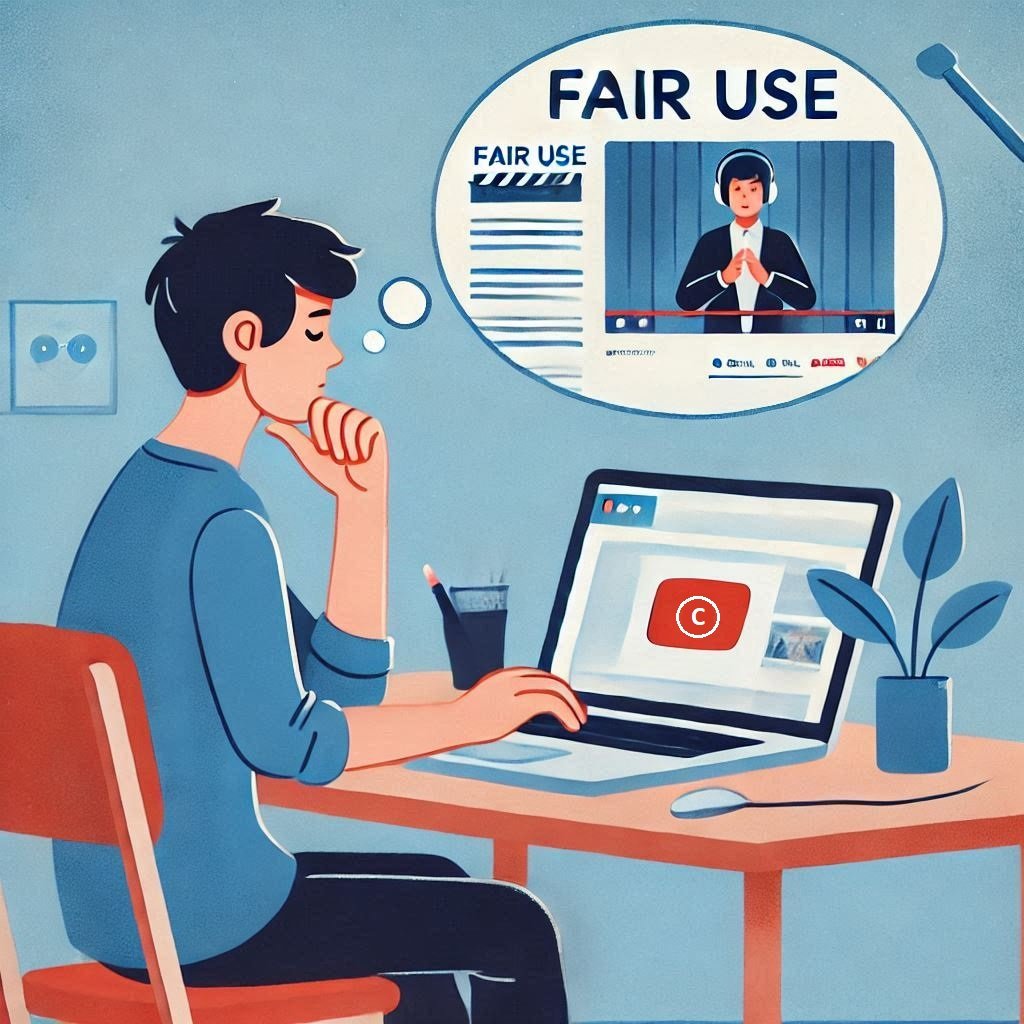
Fair use is a legal rule in Section 107 of the Copyright Act. It lets people use small or limited parts of copyrighted material without permission in certain situations. It is the most important defense in copyright cases in the US.
Courts look at four factors to decide if something is fair use:
- Purpose and character of the use — Is the use commercial or noncommercial? Is it transformative (adding new meaning, expression, or message)?
- Nature of the copyrighted work — Factual works get less protection than very creative works.
- Amount and substantiality used — How much was taken? Was the heart of the work copied?
- Effect on the market — Does the use hurt the current or future market for the original work?
Fair use is often used for commentary, criticism, news reporting, parody, teaching, and scholarly research. Fair use does not apply just because the use is non‑commercial, non‑profit, or not meant to make money.
2026 AI development update:
In Bartz v. Anthropic (2025–2026), a federal court case about whether training AI models on copyrighted works is allowed under fair use.
The court ruled that training AI models on lawfully acquired copyrighted works can be fair use when:
- The purpose of the training is highly transformative (the AI is learning patterns, not copying the works), and
- The AI’s outputs do not replace or act as substitutes for the original copyrighted works.
This case is important because it helps define how copyright law applies to AI training, and the law in this area is still changing.
How to Avoid Copyright Violation Penalties
The best way to avoid copyright infringement penalties is to understand intellectual property rights before anything goes wrong. Here are simple, practical steps:
Always assume content is copyrighted unless you have clear written proof that it is not.
Use Creative Commons licensed works and follow the exact license rules (Attribution, NonCommercial, ShareAlike, etc.).
License stock images, music, and fonts from real, trusted platforms like Getty Images, Shutterstock, or Musicbed.
Register your own creative works with the US Copyright Office — this lets you sue for statutory damages and attorneys’ fees if someone infringes your work.
Send DMCA takedown notices quickly when someone uses your work without permission.
Talk to an intellectual property attorney before copying or reproducing large parts of third‑party content.
For businesses, create a content audit policy to find and fix unlicensed materials.
What to Do If You Receive a Copyright Infringement Notice
If you get a cease and desist letter or a DMCA takedown notice, do not ignore it. Here is the simple recommended way to handle it:
- Remove or disable the allegedly infringing content right away so the infringement stops.
- Do not admit liability in any message or conversation before talking to an attorney.
- Check whether fair use or another defense (like a license or public domain) might apply.
- If you think the claim is wrong, talk to an IP attorney about sending a DMCA counter‑notice.
- Negotiate a settlement if it makes sense — many cases end this way without going to court.
- If you are sued, respond within the required time (usually 21 days after being served).
Early legal advice is extremely important. Many copyright disputes that could have been solved for a small amount of money turn into five‑ or six‑figure lawsuits because the person waited too long or replied without an attorney.
Frequently Asked Questions (FAQs)
The statutory minimum for civil copyright infringement is $750 per work. If it is innocent infringement — meaning the person truly did not know the work was protected and had no reason to think they were infringing — a court may lower it to $200 per work.
Yes. Making money is not required for copyright infringement. A copyright owner can sue even if you shared the content for free. For criminal prosecution, the government must prove:
- Willful infringement, and
- That it was done for commercial advantage or private financial gain, or
- That it meets certain legal thresholds, such as:
- At least 10 copies or phonorecords
- Total retail value over $2,500
- Within a 180‑day period
Civil penalties range from $750 to $30,000 per image for standard infringement, and up to $150,000 per image for willful infringement.
In practice, many cases involving a single unlicensed image are settled for between $500 and $8,000, particularly when the infringer removes the image promptly upon notice.
Usually, just linking to content is not direct copyright infringement under the US “server test.” The website hosting the content is usually the direct infringer, not the person linking to it.
However:
- Embedding content can be more complicated
- Courts disagree on some embedding situations
- This area of law is still changing
For anti‑circumvention violations (Section 1201):
- Civil statutory damages: $200 to $2,500 per act
- Criminal penalties:
- Up to $500,000 in fines and 5 years in prison for a first offense
- Up to $1,000,000 in fines and 10 years in prison for repeat offenses
Yes — it affects them a lot. A copyright owner can only get:
- Statutory damages, and
- Attorneys’ fees
if the work was registered with the US Copyright Office:
- Before the infringement started, or
- Within three months of first publication
If the work was not registered in time, the owner can only get actual damages, which are harder to prove and usually much lower.
Legal Disclaimer
This article is for general information only. It is not legal advice. Copyright law is complicated, depends on specific facts, and can change as courts and lawmakers update the rules. If you have a copyright infringement issue or need help with intellectual property matters, you should talk to a qualified attorney who is licensed to practice in your area.

Dr. Shahnaz Kaushar, PhD in Intellectual Property Rights
I’m a content writer and intellectual property rights specialist with over a decade of experience. I hold LL.B, LL.M, and a PhD in IPR, have taught IP law at the academic level, and have worked with a leading law firm in Dubai on brand protection and trademark matters. I use my legal background to create clear, easy‑to‑understand content that helps business owners protect their ideas.