
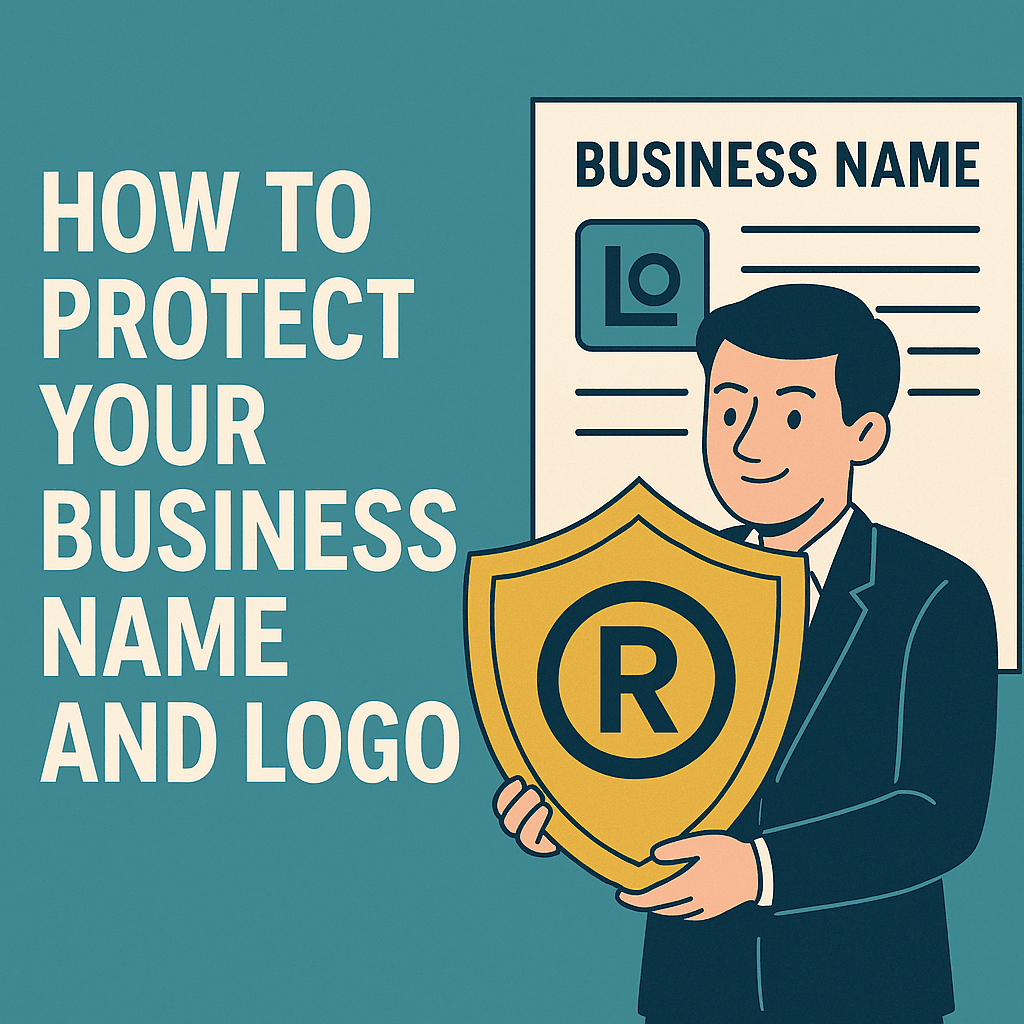
Starting a business is exciting, but protecting your brand should be one of your first priorities. If you’re wondering how to protect your business name and logo in the US, you’re not alone. Many business owners ask the same question because they want to make sure no one else can steal their hard work and confuse their customers.
The good news is that protecting your business name and logo is possible and easier than you might think. In this guide, we’ll walk you through everything you need to know about trademark protection for small business and how to keep your brand safe.
Why You Need to Protect Your Business Name and Logo
Your business name and logo are more than just pretty designs – they’re your brand identity. When customers see your name or logo, they should immediately think of your products or services. Without proper protection, competitors could use similar names or designs to steal your customers.
Think about it this way: if you spent years building a reputation for quality products, wouldn’t you be upset if someone else used a similar name to trick your customers? That’s exactly why federal trademark registration exists – to protect honest business owners like you.
Understanding Trademarks vs. Copyrights: What's the Difference?
Many people get confused about trademark vs copyright for logos, so let’s keep it simple:
- Trademarks protect your business name, logo, and slogans that identify your business
- Copyrights protect creative artwork and original designs
If your logo is just text in a regular font, you’ll need trademark protection. But if your logo has unique artwork or creative designs, you might want both trademark and copyright protection for maximum safety.
The Smart Way to Choose a Protectable Business Name
Not all business names can be protected. The courts created a system to help decide which names are strong and which are weak. Here’s what you need to know:
Strongest Names (Easy to Protect)
- Made-up words like “Kodak” or “Xerox”
- Common words used differently like “Apple” for computers
Medium Strength Names
- Names that hint at your service like “Greyhound” for fast buses
Weak Names (Hard to Protect)
- Names that describe your product like “Fast Pizza Delivery”
Names You Can Never Protect
- Generic terms like “Computer Store” or “Coffee Shop”
The landmark case Abercrombie & Fitch Co. v. Hunting World established these rules, and the USPTO trademark office still uses them today.
Step-by-Step Guide: How to Register Your Trademark
Step 1: Do a Trademark Search First
Before you do anything else, you must search existing trademarks to make sure your name isn’t already taken. The USPTO trademark database is free to search, but it can be tricky to use. You’re looking for names that are:
- Exactly the same as yours
- Sound similar to yours
- Look similar to yours
- Used for similar products or services
This step is crucial because if someone else already has rights to a similar name, your application will be rejected.
Step 2: Understand Trademark Classes
The USPTO trademark classification system divides all products and services into 45 different classes. For example:
- Class 25: Clothing and shoes
- Class 35: Business and advertising services
- Class 42: Computer and technology services
You need to register your trademark in each class where you do business.
Step 3: File Your Application
You have two choices when filing your trademark application process:
Use in Commerce: Choose this if you’re already selling products or services with your name/logo
Intent to Use: Choose this if you’re planning to use the name but haven’t started selling yet
Step 4: Wait for Examination
A USPTO trademark examiner will review your application. This usually takes 3-4 months. They might send you an “Office Action” if they have questions or concerns. Don’t worry – this is normal and doesn’t mean your application is rejected.
Step 5: Publication Period
If the examiner approves your application, it gets published in the Official Gazette for 30 days. During this time, other people can object if they think your trademark conflicts with theirs.
Step 6: Registration
If no one objects (or you successfully handle any objections), you’ll receive your federal trademark registration certificate. Congratulations – you now have nationwide protection!
Recent Legal Changes: What the Supreme Court Decisions Mean for You
Two important Supreme Court cases have made it easier to register trademarks:
In Matal v. Tam (2017) and Iancu v. Brunetti (2019), the Court ruled that the USPTO cannot reject trademark applications just because the government thinks they’re offensive or inappropriate. This means you have more freedom in choosing your business name, as long as it’s not generic or already taken.
The Benefits of Federal Trademark Registration
When you get federal trademark registration, you receive powerful legal rights:
- Nationwide protection for your name and logo
- The right to use the ® symbol
- Legal presumption that you own the trademark
- Ability to sue in federal court if someone infringes
- Protection against counterfeit imports
- Stronger position in domain name disputes.
What About Copyright Protection for Logos?
If your logo has artistic elements, you should also consider copyright registration for logos. Copyright protects the creative artwork in your logo from being copied exactly. Dual protection (both trademark and copyright) gives you the strongest legal position.
Copyright registration is cheaper and faster than trademark registration, but it protects different things. Trademark stops confusion between businesses, while copyright stops exact copying of artwork.
Common Mistakes That Cost Business Owners Money
Mistake 1: Not Searching First
Many business owners fall in love with a name, start using it, then discover someone else owns the trademark. This can cost thousands in rebranding expenses.
Mistake 2: Choosing Descriptive Names
Names like “Best Pizza” or “Quick Delivery Service” are nearly impossible to protect because they just describe what you do.
Mistake 3: Waiting Too Long
The longer you wait to file, the more likely someone else will take your name. In trademark law, the first person to use a name in commerce generally gets the rights.
Mistake 4: Not Monitoring Your Trademark
After registration, you must watch for people using similar names. The USPTO doesn’t police trademarks – that’s your job.
How Much Does Trademark Protection Cost?
Trademark registration costs vary depending on several factors:
- USPTO filing fees: $350 per class (base fee for electronic filings under Sections 1 and 44). Additional surcharges may apply per class:
- $100 if the application is incomplete (e.g., missing required information like translations, consents, or proper classifications).
- $200 if using custom (free-form) descriptions of goods/services instead of pre-approved entries from the USPTO’s Trademark ID Manual.
- $200 for each additional group of 1,000 characters (beyond the first 1,000) in free-form identifications. The old $250 (TEAS Plus) and $350 (TEAS Standard) tiers have been replaced since January 18, 2025.
- Attorney fees: $500–$2,000+ (optional but recommended, often as flat fees for straightforward applications).
- Trademark search: $300–$1,800 (highly recommended for comprehensive clearance, including federal, state, common law, and international checks).
While you can file yourself, many business owners hire trademark attorneys because the process can be complicated and mistakes are expensive to fix.
Landmark Case Laws That Show Why to register your Brand Name and Logo
These real cases show how powerful trademark protection can be—and why every business should take it seriously. When you understand how to protect your business name and logo, you aren’t just filing paperwork; you are building a legal fortress around your brand.
Apple Corps v. Apple Computer (2006)
The Beatles’ company sued Apple Inc. over trademark rights. The case showed how important it is to clearly define trademark categories and avoid confusion between similar names.
Starbucks Corp. v. Wolfe’s Borough Coffee (2013)
Starbucks sued a small coffee company for using the name “Charbucks.” The court ruled that even similar‑sounding names can dilute a famous brand.
Adidas v. Payless Shoesource (2008)
Adidas won a major lawsuit after Payless sold shoes with two and four stripes. The court held that logos and design elements are protected just like names.
These cases prove one thing: Trademark protection gives you real legal power.
State vs. Federal Protection: Which Do You Need?
You have three levels of trademark protection:
- Common Law Rights: Automatic but limited to your local area
- State Registration: Protects you within your state
- Federal Registration: Protects you nationwide
For most businesses, federal registration is the best choice because it gives you the strongest rights and allows you to expand anywhere in the US.
Also Read: Do I Have to Trademark My Business Name?
Protecting Your Brand Online
Don’t forget about domain name protection. Register your business name as a .com domain even if you don’t plan to use a website right away. This prevents competitors from buying your domain and confusing customers.
Also consider registering on social media platforms. Many business owners are surprised to find their business name already taken on Facebook, Instagram, or Twitter.
What Happens If Someone Infringes Your Trademark?
If you find someone using your trademarked name or logo without permission, you have several options:
- Send a cease and desist letter
- File a complaint with their web host or marketplace
- File a lawsuit in federal court
- Seek monetary damages and attorney fees
Having federal registration makes all these options much more powerful and likely to succeed.
Frequently Asked Questions (FAQs)
Yes. Official offices like the USPTO treat them as separate applications. A “Word Mark” protects the name in any style, while a “Design Mark” protects the specific artistic look of your logo.
Most trademarks last 10 years. The best part? They can be renewed indefinitely every 10 years, as long as you continue to use the mark in business.
Trademarks are “territorial,” meaning a US trademark only protects you in the US. If you sell globally, you should use the Madrid Protocol, which allows you to file one application to protect your brand in over 130 countries.
First, ensure you have both trademark and copyright protection (copyright automatically covers original artwork). If someone copies you, the official first step is usually having a lawyer send a cease-and-desist letter.
In the United States (USPTO), the official fee is $250–$350 per class, and you must file separate applications for your name (word mark) and your logo (design mark).
Because a name and logo are treated as two different trademarks, you must pay for each one separately.
No. Registering a domain only gives you the right to that web address. It does not stop someone else from using as their physical store name or on their products.
Yes! Through the Madrid Protocol, you can file one application to seek protection in over 120 countries simultaneously.
Final Advice: Protect Your Brand name and Logo Before Someone Else Uses It
Protecting your business name and logo isn’t just a good idea – it’s essential for long-term success. While the trademark registration process might seem complicated, it’s much easier and cheaper than dealing with trademark infringement later.
Start with a thorough trademark search, choose a strong name that’s easy to protect, and file your federal trademark application as soon as possible. Consider both trademark and copyright protection for maximum security.
Remember, your business name and logo are valuable assets. Protecting them properly is one of the best investments you can make in your company’s future. Don’t wait until it’s too late – start the trademark protection process today.
Disclaimer: The information in this article is provided for general educational purposes only and does not constitute legal advice. Trademark laws, filing requirements, and fees vary by country and may change over time. For guidance specific to your situation, you should consult a qualified trademark attorney or your local intellectual property office. No attorney‑client relationship is created by reading this content.