
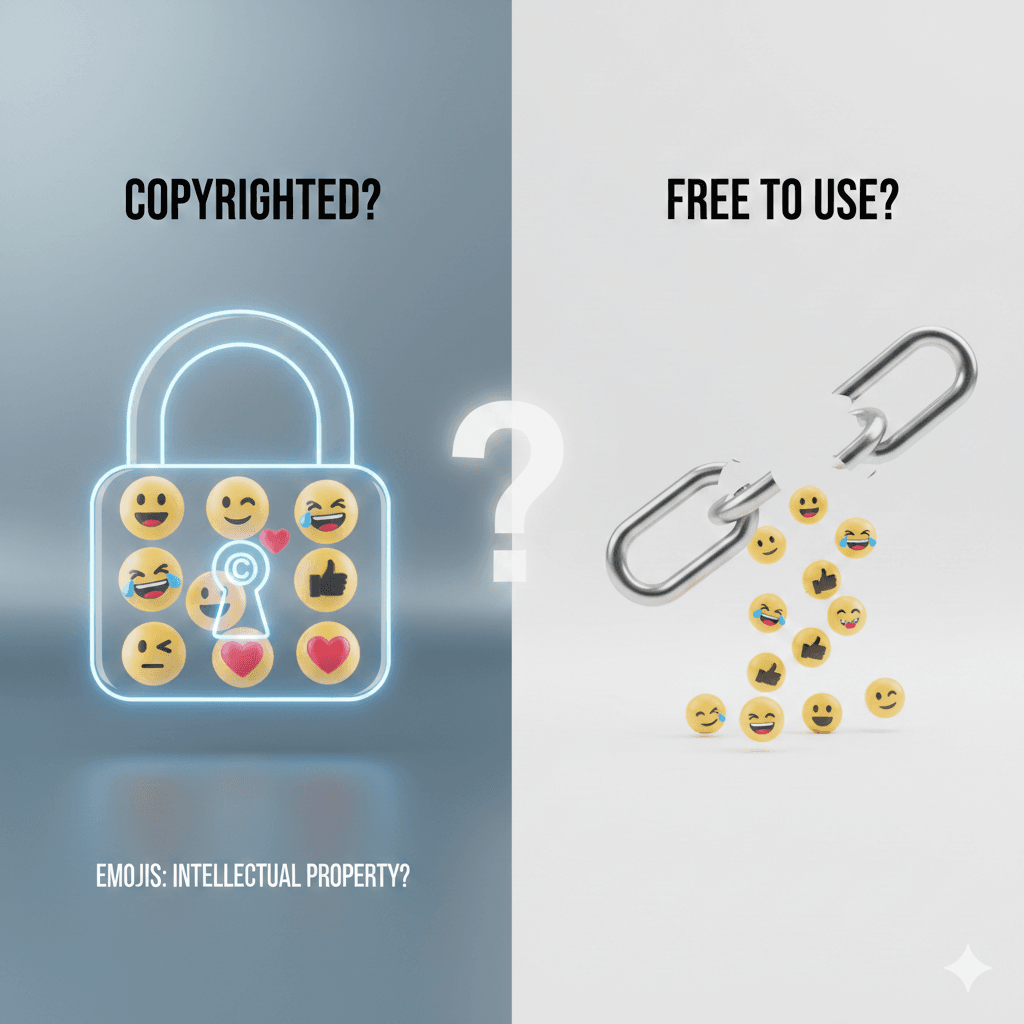
We use emojis every day—the heart ❤️, the smiley 🙂, the thumbs up 👍. They feel free because they’re already on our phones. But if you’re a business owner, designer, or content creator, you need to ask: Are emojis copyrighted or free to use?
The short answer: the idea of an emoji is free, but the artwork is copyrighted. This article breaks down emoji law in plain words, with examples, case studies, and practical tips for safe use.
What Exactly Are Emojis?
Emojis are those colorful little pictures we use every day—❤️ for love, 😊 for happiness, 👍 for approval. The word comes from Japanese: “e” (picture) plus “moji” (character).
Here’s how they actually work:
The Unicode Code – Every emoji has a universal code number managed by the Unicode Consortium. This ensures that when you send a smile from your iPhone, it shows up as a smile on your friend’s Android phone.
The Artwork – While the code is the same everywhere, the actual picture varies. Apple draws their version, Google draws theirs, and Samsung draws theirs. That’s why the same emoji looks slightly different on different phones.
Are Emojis Copyrighted or Free to Use?
This is where it gets interesting, and the answer has two parts:
What’s NOT copyrighted (Free to Use):
- The concept of “smiling face” or “red heart”
- The Unicode code itself
- The basic idea behind any emoji
What IS copyrighted (Not Free to Use):
- Apple’s specific emoji artwork
- Google’s specific emoji designs
- Samsung’s unique emoji illustrations
- Any company’s artistic interpretation
The U.S. Copyright Act (Title 17, USC) and international copyright law protect these designs just like any other artwork. So when you ask “are emojis copyrighted or free to use,” remember both parts of the answer matter.
Are Apple Emojis Copyrighted?
Yes, absolutely. Apple emojis are copyrighted, along with Google’s, Samsung’s, and every other company’s emoji designs. Yes — Apple’s emoji designs are copyrighted.
While the concept of emojis comes from the Unicode Standard (which is open and not copyrighted), the specific artwork and visual style Apple uses in iOS, macOS, and other platforms are Apple’s intellectual property. That means you can freely use emojis in Apple’s ecosystem (like in apps built with Apple’s SDK), but reproducing or distributing Apple’s emoji images outside those contexts can raise copyright and licensing issues.
Key Case: Cub Club Investment v. Apple Inc. (2022)
Facts: Cub Club Investment, creator of the iDiversicons app offering racially diverse emoji, sued Apple claiming that Apple copied its emoji artwork when introducing diverse emoji in iOS.
The court acknowledged that emoji artwork can be protected under copyright law, but found Apple’s designs sufficiently different in style and detail. Because both sets had to depict the same Unicode concepts, any overlap was considered inevitable.
The lawsuit was dismissed, and Apple defeated both copyright and trademark claims.
Remember: You can’t copyright the letter “A,” but you CAN copyright your unique font design of the letter “A.” Emojis work the same way.
The Big Question: Can I Sell Products with Emojis?
This is where most people get into trouble. When you search “do I need permission to sell emoji merchandise,” the answer is almost always YES.
Selling T-Shirts, Mugs, or Stickers
If you copy Apple’s heart emoji ❤ and print it on t-shirts to sell, you’re breaking copyright law. Period. This is the fastest way to get a lawsuit.
Risks of Using Copyrighted Emojis
Copyright Infringement: Selling products with Apple’s emoji artwork could expose you to takedown notices or lawsuits.
Trademark Issues: Some emoji designs are associated with brands (e.g., Apple’s style), so misuse could also raise trademark concerns.
Licensing Limits: Even if you’re an Apple developer, your license only covers use within apps, not merchandise.
Your safe options:
- Create your own completely original emoji-style artwork
- Use open-source emoji sets like Google’s Noto Emoji or Twitter’s Twemoji (these have commercial licenses)
- Hire a designer to make custom icons you’ll own
Can I Use Emojis in My Business Logo?
You can freely use emojis in everyday communication, but you cannot simply take Apple’s, Google’s, or Samsung’s emoji artwork and place it in your business logo. Those designs are copyrighted. To stay legally safe, you must either create your own emoji‑style artwork or use open‑source emoji sets that allow commercial use.
Why Emojis in Logos Are Legally Risky
- Copyright Protection: Emoji designs are considered original artistic works. Tech companies own the copyright to their emoji artwork.
- Unicode vs. Artwork: The Unicode Consortium provides the code for emojis (like U+1F603 for “grinning face”), but not the artwork. The artwork is what’s protected.
- Commercial Use: Logos are commercial identifiers. Using copyrighted emoji artwork in a logo is a direct commercial use, which makes infringement more serious.
In simple terms: you can text a smiley 🙂 to anyone, but you cannot use Apple’s smiley artwork as your company logo.
Real Court Cases That Prove Emojis Are Serious Business
Case 1: The $60,000 Thumbs-Up
Case: South West Terminal Ltd. v. Achter Land & Cattle Ltd., 2023 SKKB 116 (Court of King’s Bench, Saskatchewan).
Facts: Farmer Chris Achter responded to a grain contract text with a 👍 emoji. The court ruled this constituted acceptance of the contract. He was ordered to pay CAD $82,200 (~USD $61,000) for breach.
Case 2: Fraud & Securities Cases with Money/Rocket Emojis (U.S.)
Case: Friel v. Dapper Labs, Inc., No. 1:21‑cv‑05837 (S.D.N.Y. 2023).
Facts: A New York federal judge (Victor Marrero) ruled that emojis like 🚀 (rocket), 📈 (stock chart), and 💰 (money bags) used in NFT promotions could objectively signal financial returns, supporting securities fraud allegations.
Case 3: Workplace Harassment Evidence
Examples: Courts have admitted emojis as evidence in harassment and misconduct cases.
In South Africa, allegations against Judge Selby Mbenenge included suggestive texts with emojis, examined by a Judicial Conduct Tribunal.
U.S. employment law commentary highlights that emojis like 😉 (wink), 🔥 (flame), 🍆 (eggplant), and 🍑 (peach) have been used in harassment claims
When people ask “can emojis be used in court cases,” the answer is definitely yes. Courts worldwide increasingly treat emojis as meaningful communication with legal consequences, not just playful symbols.
Your Safe Use Checklist
Want to use emojis professionally without legal worries? Follow these steps:
- For personal messages and social media – Use emojis freely.
- For blog posts and websites – Generally safe for communication.
- For commercial products – Only use open-source emoji sets or create your own.
- For business logos – Always create original artwork.
- When in doubt – Consult with a lawyer or use licensed emoji sets
The Legal Foundation
The laws protecting emoji designs include:
- U.S. Copyright Act (Title 17, USC) – Protects original artistic works.
- Unicode Consortium Standards – Manages codes but doesn’t own artwork.
- World Intellectual Property Organization (WIPO) – Confirms international copyright protection.
Final Thoughts
Are emojis copyrighted or free to use? The design is copyrighted, but the idea is free. You can text emojis to your heart’s content, but selling products with copied emoji designs requires permission.
Emojis have evolved from simple icons to legal evidence in courtrooms. They’re protected intellectual property, binding contract symbols, and powerful brand elements. Understanding their legal side keeps you creative AND compliant.
Whether you’re a business owner wondering “can I use emojis in my business logo” or a designer asking “do I need permission to sell emoji merchandise,” the key is simple: respect the copyright on the artwork, and you’ll stay safe.